
landmark
Bulguksa Temple
A UNESCO masterpiece of ancient Korean Buddhist art and architecture, featuring exquisite stone bridges, pagodas, and golden Buddha statues.
12 km · about 25 min drive
Gyeongsangbuk-do, South Korea · Asia
Gyeongju is worth a stop: 25 minutes from Yeonil, 26km from Gameunsa Temple Site.
Gyeongju is in Gyeongsangbuk-do, South Korea, with about 250,000 people. You drive on the right here. The nearest town is Yeonil, about 20 km away.
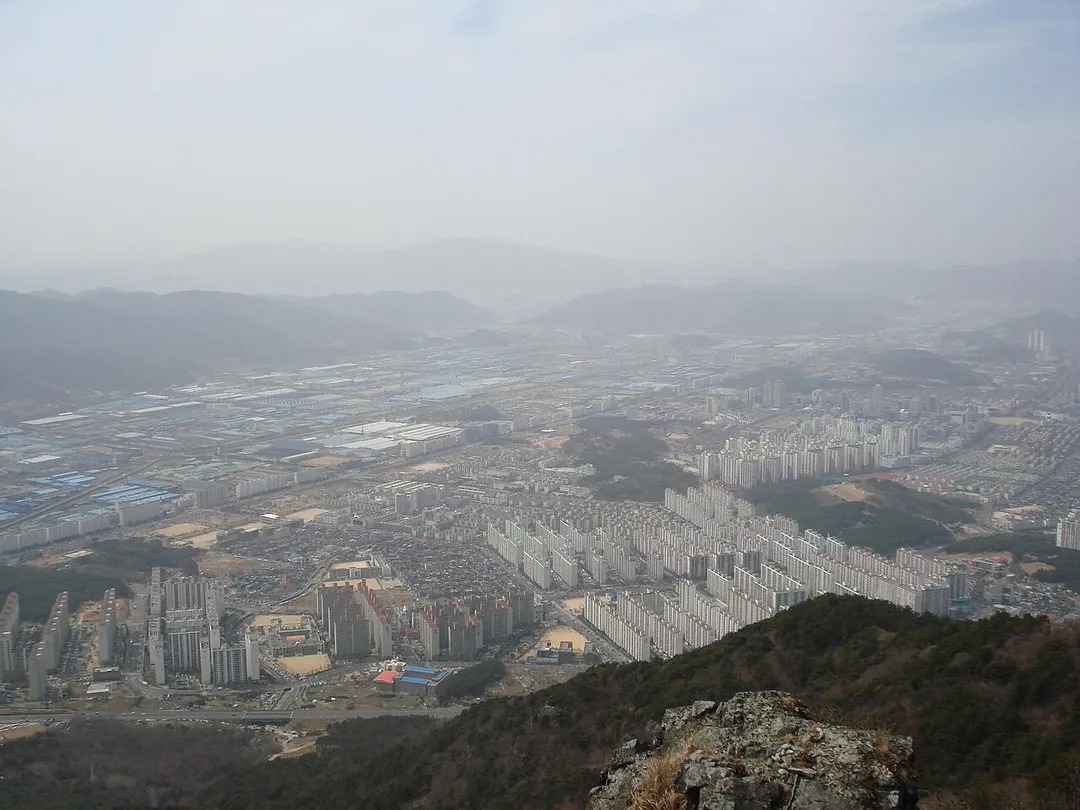
Gyeongju (Korean: 경주; pronounced [kjʌŋ.dʑu]), historically known as Sŏrabŏl (서라벌; pronounced [sʰʌ.ɾa.bʌɭ]), is a coastal city in the far southeastern corner of North Gyeongsang Province, South Korea. It is the second largest city by area in the province after Andong, covering 1,324 km2 (511 sq mi) with a population ofRead more
264,091 people as of December 2012. Gyeongju is 370 km (230 mi) southeast of Seoul, and 55 km (34 mi) east of Daegu. The city borders Cheongdo and Yeongcheon to the west, Ulsan to the south and Pohang to the north, while to the east lies the coast of the Sea of Japan. Numerous low mountains—outliers of the Taebaek range—are scattered around the city.
Gyeongju was the capital of the ancient kingdom of Silla (57 BC – 935 AD), which ruled about two-thirds of the Korean peninsula at its height between the 7th and 9th centuries, for close to one thousand years, where it was known as Sŏrabŏl. According to Samguk yusa, Sŏrabŏl had more than 170,000 households or between 800,000 and 900,000 inhabitants.
Later Silla was a prosperous and wealthy country, and Gyeongju was the fourth largest city in the world. A vast number of archaeological sites and cultural properties from this period remain in the city. Gyeongju is often referred to as "the museum without walls". Among such historical treasures, Seokguram grotto, Bulguksa temple, Gyeongju Historic Areas and Yangdong Folk Village are designated as World Heritage Sites by UNESCO. The many major historical sites have helped Gyeongju become one of the most popular tourist destinations in South Korea.
The city of Gyeongju was united with the nearby rural Gyeongju County in 1995 and is now an urban–rural complex. It is similar to 53 other small and medium-sized cities with a population under 300,000 people in South Korea. As well as its rich historical heritage, Gyeongju today is affected by the economic, demographic, and social trends that have shaped modern South Korean culture. Tourism remains the major economic driver, but manufacturing activities have developed due to its proximity to major industrial centers such as Ulsan and Pohang. Gyeongju is connected to the nationwide rail and highway networks, which facilitate industrial and tourist traffic.
Compare prices across Booking.com, Airbnb, Expedia, and more. Select your dates to see availability.
Pick your must-haves once: provider links open pre-filtered. Each filter lists which sites it applies to.
Compare before you book!
Prices can vary significantly between platforms. We recommend checking at least 2-3 sites to find the best deal for your stay in Gyeongju.
Discover famous landmarks, scenic roads, and more near Gyeongju.
Within an hour or so of Gyeongju: Bulguksa Temple (12 km), Seokguram Grotto (13 km), Gameunsa Temple Site (26 km), Tongdosa (42 km).
Gyeongju is in Gyeongsangbuk-do, South Korea, about 20 km from Yeonil.
Road trip
Add it as a stop and the planner works out the driving, the nights and what's worth seeing on the way.
Start planningSwipe through places to go
Places within a drive of Gyeongju. Keep the ones you like and add them to your trip.
Essential numbers in South Korea
Tourist helpline (English): 1330.
Full driving guide for South Korea5 notable places within an hour's drive.
landmark
A UNESCO masterpiece of ancient Korean Buddhist art and architecture, featuring exquisite stone bridges, pagodas, and golden Buddha statues.
12 km · about 25 min drive
landmark
A stunning eighth-century Buddhist hermitage grotto housing a monumental seated Buddha overlooking the East Sea.
13 km · about 25 min drive
ancient ruins
The ruins of a 7th-century Silla temple with two 13 m triple-storey stone pagodas still standing, built by King Sinmun near the coast where his father's underwater tomb lies offshore.
26 km · about 30 min drive
landmark
One of Korea's three jewel temples, founded in 646, whose main hall has no Buddha statue because relics of the Buddha are enshrined in the stupa behind it. A long pine-lined approach leads in from the road.
42 km · about 50 min drive
scenic viewpoint
A headland on the Ulsan coast that sees the first sunrise on the Korean mainland, marked by a white lighthouse and an oversized postbox. Crowds gather here at New Year.
55 km · about 65 min drive
Other places to explore near Gyeongju.
Your trip starts here
Pick the days, drop in the stops, and share it with whoever's coming.