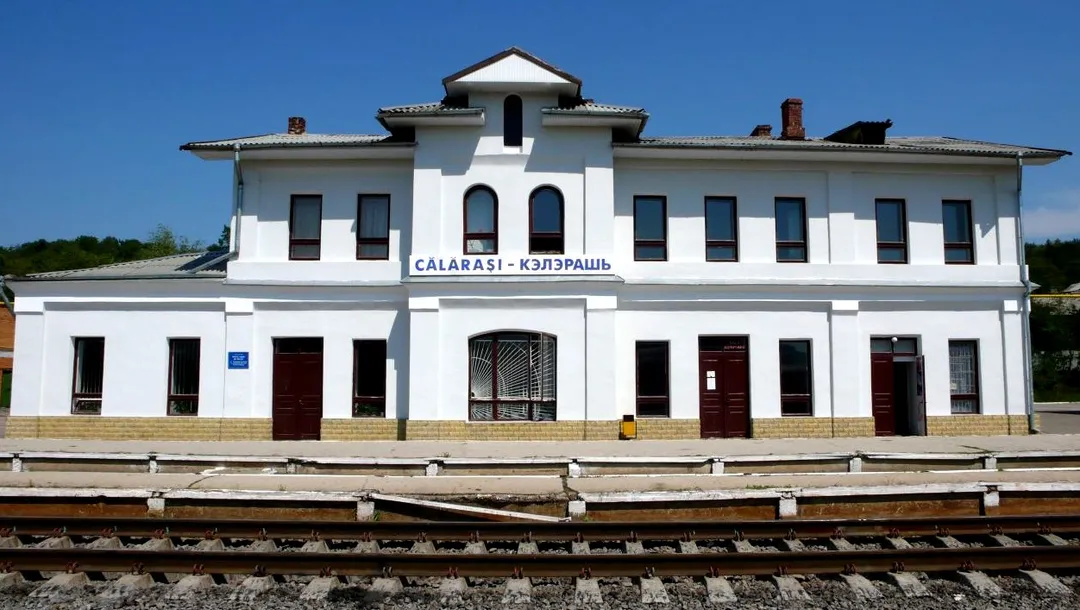
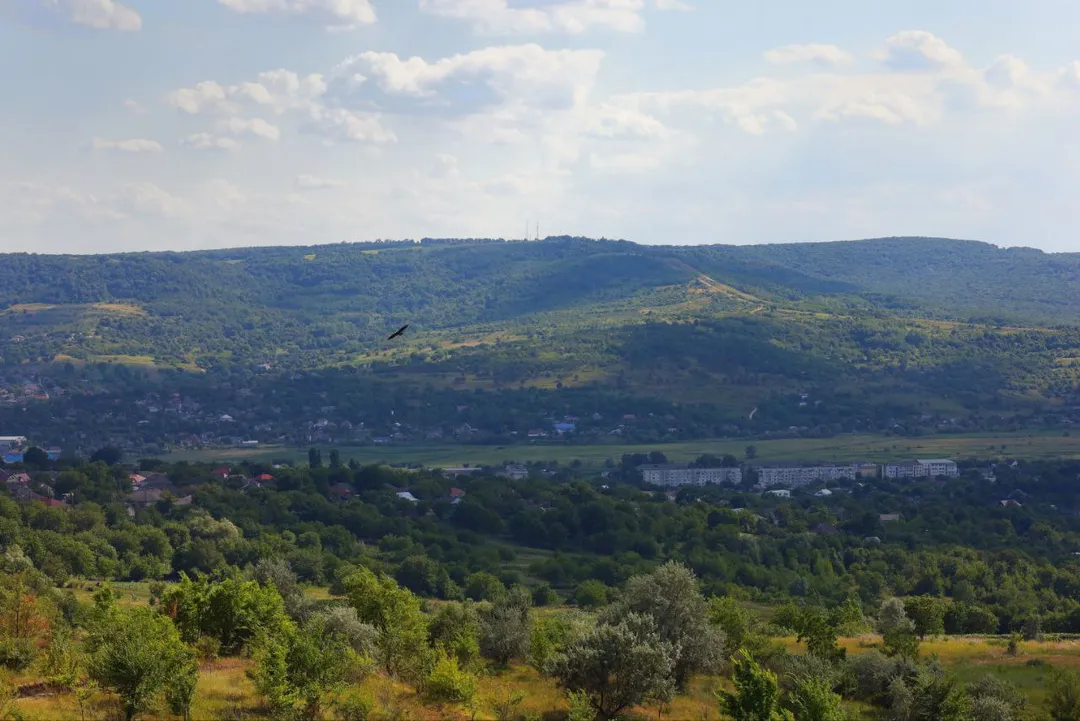
Călăraşi sits on the route: 25 minutes from Bucovăţ, 50km from Orheiul Vechi.
Călăraşi is in Moldova, with about 14,000 people. You drive on the right here. The nearest town is Bucovăţ, about 13 km away.
Călărași (Romanian pronunciation: [kələˈraʃʲ] ) is a town in Moldova, founded in 1848.
Long ago, the word "călărași" meant "horsemen" (today the word is "călăreți"). The name of Călărași was inspired by a legend which tells that once, when Stephen III of Moldavia fought the Ottomans, he ordered a regiment of horsemenRead more to stand guard. They fought the Ottomans, sacrificed themselves and, finally, won the battle.
Călărași was historically a Hassidic Jewish town: 4,593, or 89% of the population, were Jewish occupants in 1897. In 1905, 60 Jews were killed, 300 were injured and over 200 houses were burned down as part of the wave of Russian pogroms. Many of the survivors fled to nearby Chișinău or emigrated to Romania, Austria, Palestine and the United States. In 1930, 3,631 residents (76% of the population) were Jewish. The Jewish community had welfare organizations, a hospital, a Talmud Torah and a library among other community facilities.
In 2018, Dumitru Grosei released an ethnographic documentary in Romanian called "Călărași – A Land by the Gate of Heaven" focused on the town's cultural history and folklore.
The city is the administrative center of Călărași District; it also administers one village, Oricova.
An underground wine city 15 km north of Chișinău: 120 km of limestone tunnels with streets named after grape varieties, toured by electric car past a national collection of 1.3 million bottles, including Göring's captured wines.
43 km · about 50 min drive
ancient ruins
Orheiul Vechi
Open-air archaeological complex in a dramatic gorge with a cave monastery, ancient fortifications, and panoramic Moldovan landscapes.
50 km · about 60 min drive
landmark
Mileștii Mici Winery
The world's largest wine cellar by Guinness World Records: 200 km of galleries in an old limestone mine south of Chișinău holding over 1.5 million bottles. Visitors drive their own cars through the underground 'streets' on guided tours.